
You join your first development team. You finish a change, the tests pass, and your Pull Request is approved. Now you need to get it into production.
Then a few questions come up:
- Who creates the production environment?
- Where do the credentials come from?
- What process deploys the application?
- Where do you check if something went wrong?
Imagine this happening across dozens of teams at a company with more than 10,000 employees. It is a useful starting point for understanding what Platform Engineering offers and how it relates to DevOps.
What is DevOps?
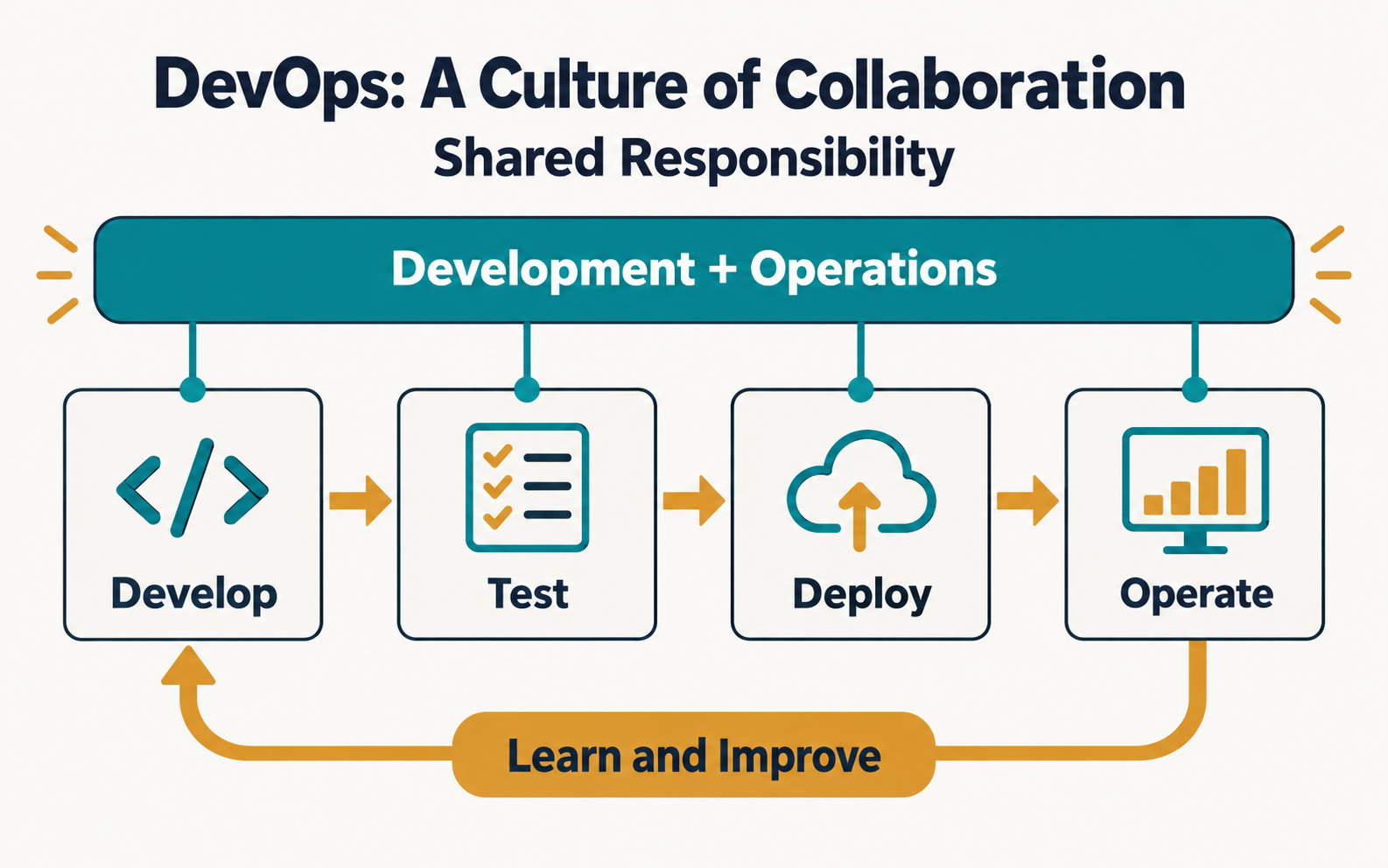
DevOps is a culture of collaboration that, together with practices and tools, helps teams deliver and improve applications and services faster. It brings development and operations closer so they share responsibilities throughout development, testing, deployment, and operation. [1]
In everyday work, it includes practices such as:
- Continuous integration (CI): frequently integrating new code changes into a shared repository and using automated tests to check that everything still works.
- Continuous delivery (CD): keeping software ready for production environments through repeatable steps. Deployment to production may require approval.
- Infrastructure as code: defining resources such as servers, networks, and services through code, usually stored in a repository so the change history can be viewed and reviewed.
- Monitoring and feedback: observing how the application works after release and using what you learn to improve it. [1]
Development and operations need to collaborate before launch. A pipeline automates steps such as testing code, preparing the application, and deploying it, but the teams also need to communicate and agree on how to work together. [2]
What is Platform Engineering?
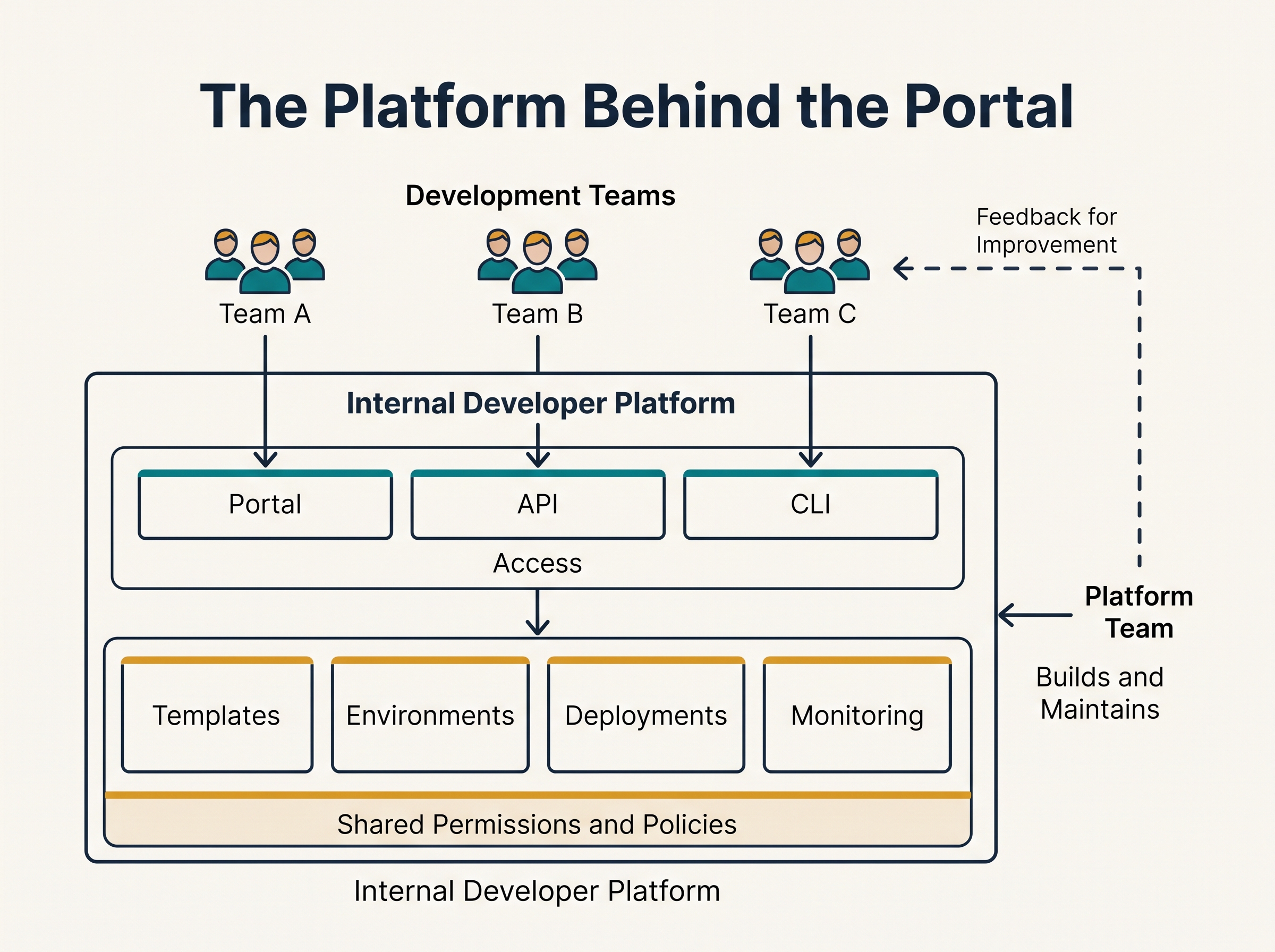
Platform Engineering is the practice of building and maintaining an internal platform that makes work easier for development teams. Its users are other software engineers within the company.
An Internal Developer Platform (IDP) brings together tools to create, deploy, and maintain applications. It can offer templates and ready-to-use environments through a portal, an API, or the terminal. The portal is an entry point; the platform also includes the systems and processes behind it. [3]
The aim is to reduce cognitive load: everything you need to understand and remember to complete a task. If you want to deploy an API, it helps to have a guide and tools that already handle the most common steps.
That route is often called a golden path, or recommended path. It may include an application template, tests, deployment, and tools to check that everything is working. Self-service lets you complete those steps without asking another team to perform each one for you. [4]
What does a Platform Engineer do?
A Platform Engineer builds the platform's tools and keeps them working. Their tasks vary by company, but usually include:
- Understanding developers' difficulties. Finding out where they get stuck, which tasks they repeat, and what they need to move forward.
- Creating tools that several teams can use. For example, project templates and processes for setting up environments or deploying applications.
- Making those tools easy to use. Writing clear instructions and helping people solve problems.
The platform is treated as an internal product: the team talks to its users, decides which problems to address first, and improves it based on their feedback. [3]
It also includes security and usage rules, such as who can access each environment and which configurations are allowed. It provides tools to look up errors and measure how applications are performing. [4]
The work continues after the tools are built: the team needs to fix failures and help users when things change. To understand whether the platform is useful, it helps to look at how many teams use it, what it makes easier, and where people still get stuck. Listening to their feedback is part of maintaining and improving it. [5]
Platform Engineering and DevOps: the differences
Here is how they relate:
| Aspect | DevOps | Platform Engineering |
|---|---|---|
| What it is | A culture and practices for working together | Building and maintaining an internal platform |
| What it focuses on | How development and operations work together | Making common tasks easier for developers |
| How it works in practice | Sharing responsibilities, automating, and learning from results | Providing self-service, templates, and shared tools |
The two complement each other. DevOps encourages collaboration, and Platform Engineering helps put it into practice with tools that many teams can use. For example, a deployment process agreed on by the teams can become part of the platform. [5]
You will also find roles called DevOps Engineer. Their responsibilities depend on the company. Having someone with that title is not enough to adopt DevOps. Remember: DevOps is a culture! Collaboration needs to be part of everyday work. [2]
An example: taking an API to production
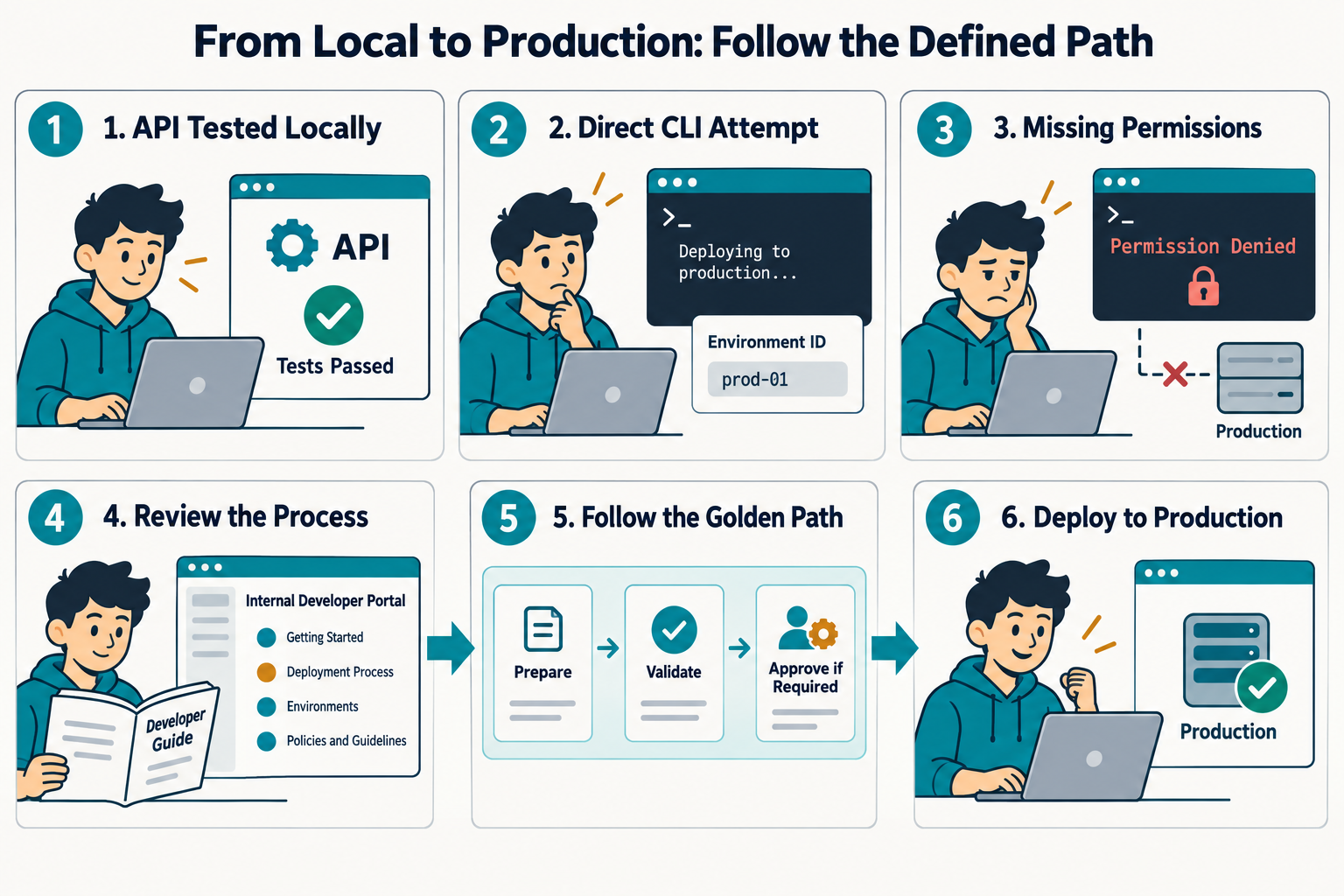
Imagine you are a junior developer building an API for a new initiative. You have tested it locally and it works. Now you want to take it to production.
You work in a corporate environment with clear rules and established patterns. Your team shared the environment IDs, so you try deploying the API through the CLI, the command-line interface. The attempt fails: you do not have permission.
In this case, your account cannot deploy directly because the company has a defined path for doing so. Knowing the environment ID only tells you where you want to go; you still need to understand the process.
The next step is to review the documentation and open the Internal Developer Portal. There, you can find out how to take your API to production: what to prepare, which deployment workflow to use, and which checks or approvals are required.
That is the golden path in this example: a documented route supported by the platform's tools for deploying according to the company's rules. The portal helps you find and follow it.
The Platform Engineer builds and maintains that path together with the teams involved. DevOps shows up in how development and operations collaborate to agree on the process and improve it. If you get stuck on a step, your feedback helps make the way forward clearer for the next developer.
Where should you start as a junior developer?
You can start by following a small change through your team's process:
- Find out what runs the tests and what performs the deployment.
- Identify where to look up errors and who maintains each part of the process.
- Use an internal template and note any confusing instructions.
- Ask how to roll back a change and work alongside someone who knows the procedure.
If the Platform Engineer role interests you, you could start by improving those instructions or automating a repetitive task with your team's help. That is a way to discover whether you enjoy building tools for other developers.
Summary
DevOps is a culture of collaboration, supported by practices and tools for delivering and maintaining software. Platform Engineering makes that work easier through an internal platform, and the Platform Engineer builds and maintains its tools.
As a developer getting started, understanding this relationship helps you work out what the platform can handle, what your application needs, and who to collaborate with when things get complicated.